
Greasy Cook-Line Floors
Concentrated degreasing breaks down the oily film that accumulates around fryers, ranges, preparation stations, and equipment approaches. Edges and reachable spaces beneath movable equipment receive focused attention.
Serving Irvine, California & surrounding areas
Remove built-up grease, food residue, and embedded grout soil with a cleaning plan fitted to your flooring, kitchen schedule, and high-traffic work areas.
Cleaning Planned for Active Kitchens
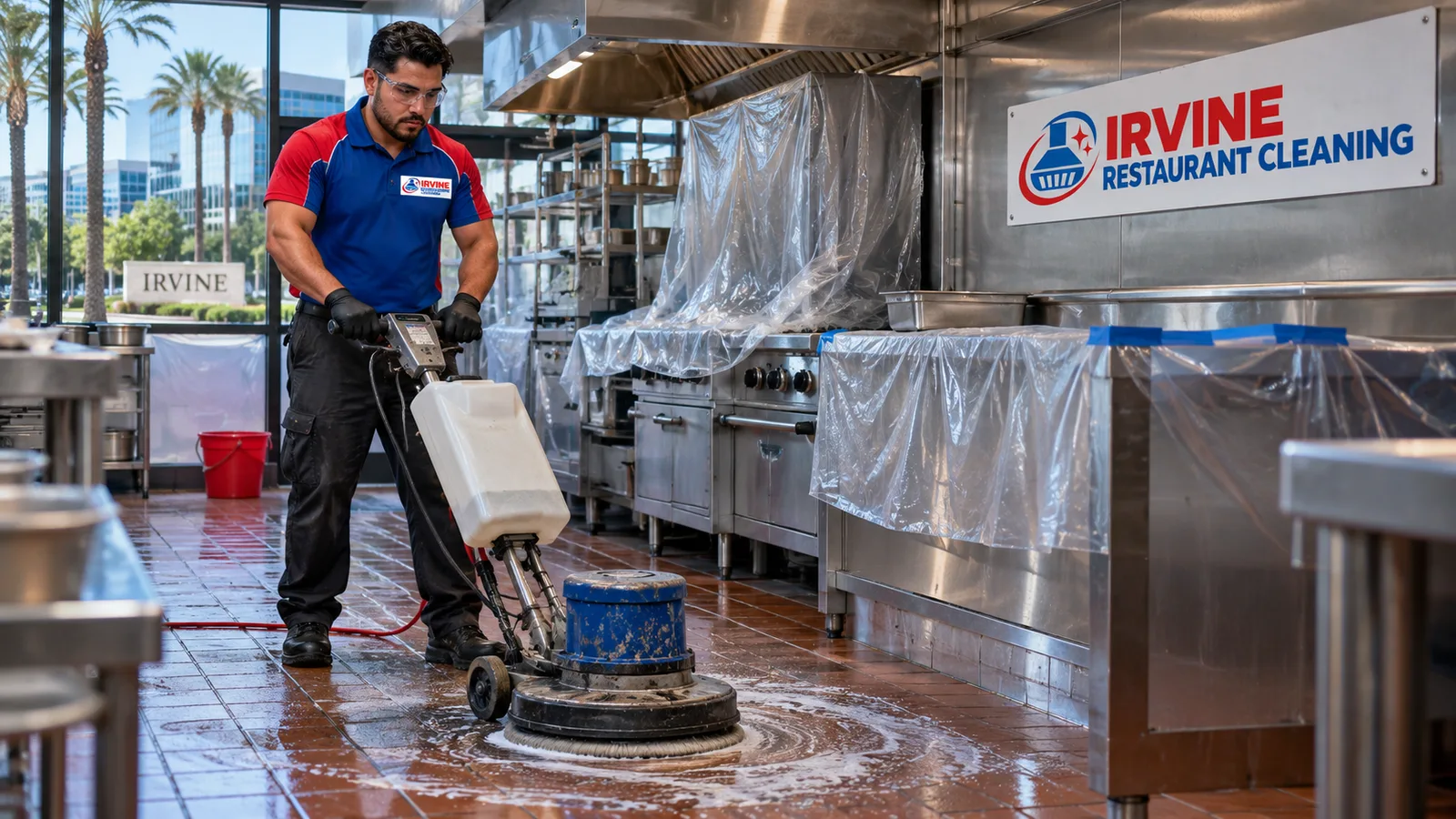
Commercial Kitchen Floor Cleaning targets the greasy film and compacted soil that routine mopping often leaves behind. Oil, cooking residue, tracked-in debris, and dirty mop water can settle into textured tile, grout joints, edges, and the areas beneath movable equipment. Repeated mopping may spread that residue instead of removing it.
Irvine Restaurant Cleaning approaches the work as an experienced restaurant team in Irvine, planning around active kitchens rather than treating the floor like an ordinary office surface. The scope can cover cook lines, prep areas, dishwashing zones, walk-in approaches, service corridors, and other back-of-house floors. We account for flooring type, drainage, fixed equipment, grease concentration, access, and the time available before staff return.
Restaurants around the Irvine Spectrum operate amid sustained dining and entertainment traffic, while food businesses near the Irvine Business Complex often work around office demand, deliveries, and mixed commercial activity. Quail Hill and Woodbridge have neighborhood dining centers where shared access and nearby tenants may affect equipment staging. These operating conditions matter because a useful cleaning plan must fit service hours, reopening needs, and building access.
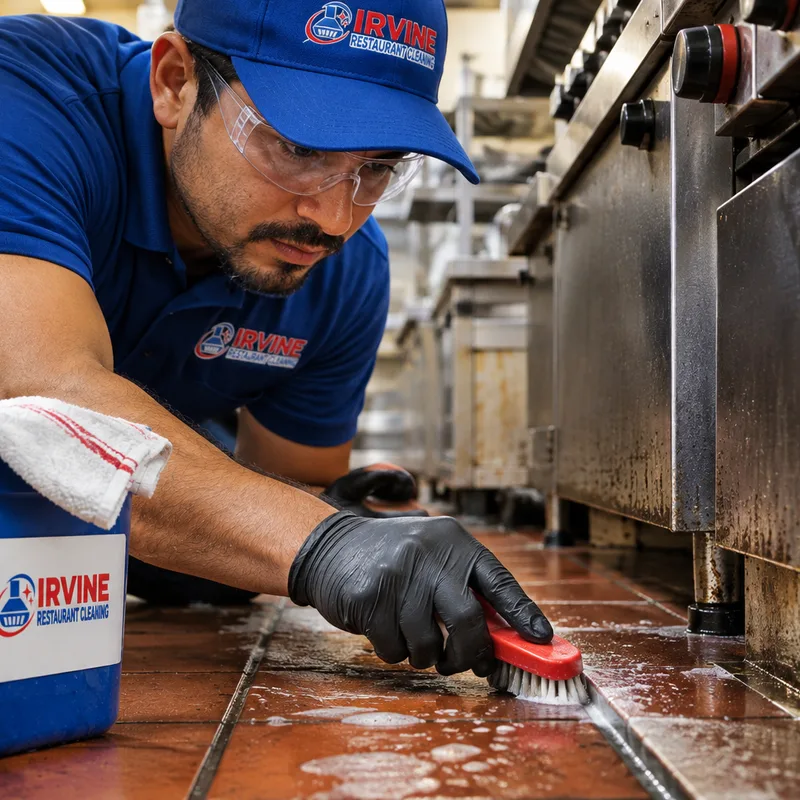
Effective restaurant floor degreasing starts with the correct chemistry and enough dwell time for the product to loosen oily soil. A suitable commercial degreaser is applied in controlled sections, then agitated with a deck brush, grout brush, or floor machine selected for the surface. The released residue must be recovered rather than pushed toward walls or left to dry again.
Ceramic and quarry tile usually tolerate more mechanical agitation than resilient flooring, but the cleaning method still has to account for grout condition, slip-resistant texture, transitions, and damaged areas. Chemical strength is not a substitute for technique. Overly aggressive products can affect some finishes, metals, or adjacent materials, while weak dilution and short dwell time may leave a greasy film.
Kitchen floor degreasing also requires control around floor drains and equipment. Staff should never assume that every substance can be washed into a drain. Orange County Sanitation District publishes requirements for wastewater discharge and fats, oils, and grease management, and each restaurant remains responsible for following the rules that apply to its operation. Our cleaning scope focuses on controlled application, soil pickup, and responsible handling of recovered residue.
Concentrated degreasing breaks down the oily film that accumulates around fryers, ranges, preparation stations, and equipment approaches. Edges and reachable spaces beneath movable equipment receive focused attention.
Restaurant tile cleaning uses suitable chemistry and agitation to release residue from textured or slip-resistant surfaces where flat mops may glide over low points.
Restaurant grout cleaning works cleaning solution into recessed joints with targeted brushing or machine agitation. Permanent discoloration, missing grout, and failed repairs may remain visible after soil is removed.
These areas often collect food residue, detergent film, tracked grease, and moisture. Controlled cleaning and recovery help prevent loosened soil from being redistributed.
Detail work addresses wall lines, thresholds, equipment legs, drain surrounds, and floor transitions that larger machines cannot reach effectively.
Recurring service can be planned around the rate of grease accumulation, floor texture, kitchen volume, and the restaurant's operating schedule rather than an arbitrary interval.
We identify the flooring material, heavy grease zones, grout condition, drains, damaged joints, fixed equipment, and access limitations. Existing cracks, loose tiles, failing grout, or coating wear are documented because cleaning cannot repair them.
Loose debris is removed, movable items are addressed within the agreed scope, and nearby surfaces are considered before wet work starts. The plan also defines which zones remain unavailable while cleaning is underway.
Degreaser or floor cleaner is mixed for the soil and surface, applied in manageable areas, and allowed suitable dwell time. Product selection accounts for flooring compatibility and nearby materials.
Mechanical scrubbing or hand detailing loosens embedded grime. Brush or pad choice depends on floor texture and condition, with extra attention given to grout lines, corners, transitions, and cook-line buildup.
Suspended soil and cleaning solution are picked up with appropriate wet-recovery equipment. Where the surface permits, controlled rinsing removes remaining cleaner without flooding equipment bases or adjacent areas.
The cleaned area is checked for residue and allowed to dry before normal traffic resumes. We identify any staining, worn grout, damaged tile, or coating failure that cleaning revealed but could not correct.
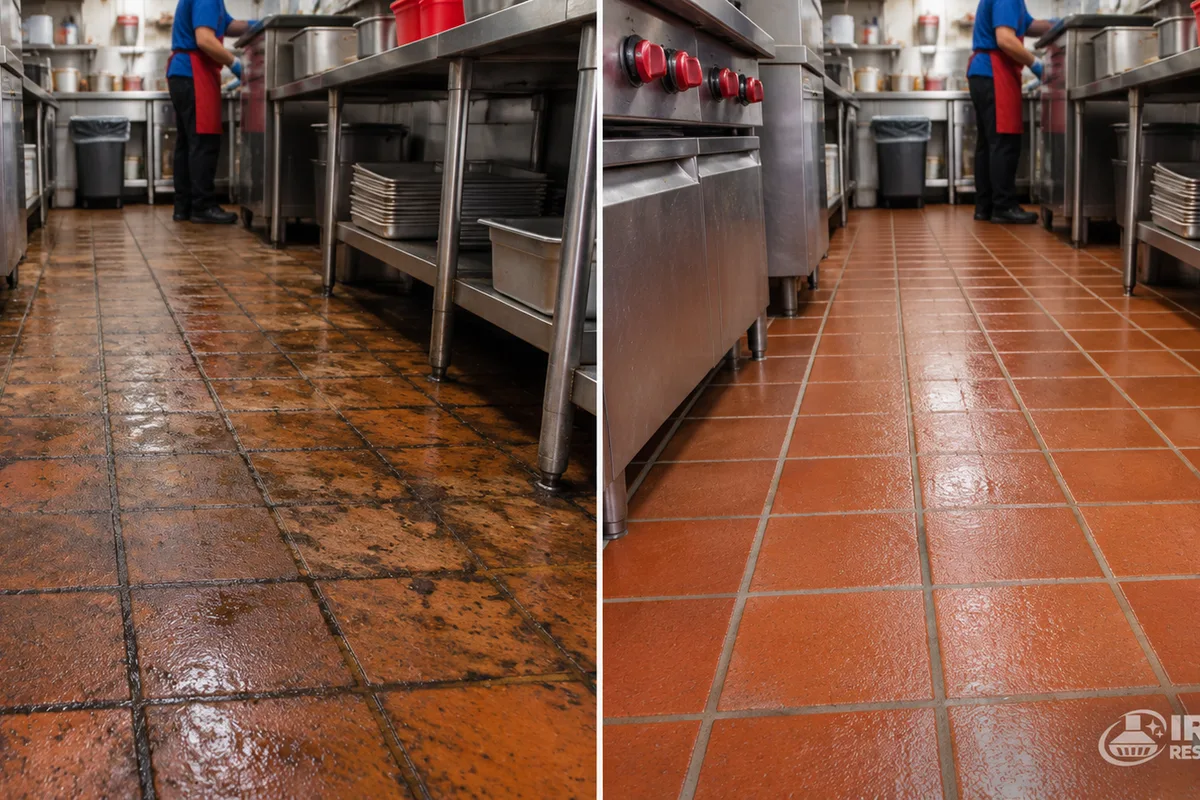
Tile and grout do not soil in the same way. Tile holds surface film and residue within its texture, while cementitious grout is recessed and can absorb soil if it is unsealed or worn. Restaurant grout cleaning therefore needs direct agitation and thorough extraction. Simply increasing water pressure may spread contaminated liquid, force moisture into weak joints, or leave residue around equipment.
A test area helps confirm how the floor responds and separates removable soil from permanent change. A dark grout line may brighten substantially after cleaning, but staining, chemical damage, missing material, and uneven historic repairs will not disappear. Likewise, a dull tile may be coated with grease, physically worn, or both. We describe that distinction before promising a result.
Quarry tile is common in commercial food-preparation settings because it is durable, but its textured surface and numerous grout joints can retain greasy residue. Other kitchens use ceramic tile, concrete, epoxy-coated systems, or resilient commercial flooring. Each requires compatible chemistry, suitable agitation, and controlled recovery. After cleaning, the restaurant should maintain the result with clean mop solution, correctly diluted products, regular tool changes, and prompt attention to spills.
Local Scheduling and Scope
The right service interval depends on cooking methods, traffic, floor texture, spill frequency, ventilation performance, and daily cleaning practices. A high-output fry station may need more frequent deep degreasing than a light-preparation kitchen. Dish areas can develop a different mixture of food soil, detergent residue, and tracked grease. The schedule should follow actual conditions.
For restaurant floor cleaning in Irvine, timing is often as important as cleaning power. A crew may need to work after close, before preparation begins, or during a planned shutdown. Drying time, equipment setup, alarm or key access, loading routes, and neighboring tenants should be settled before service. Irvine Restaurant Cleaning is based on Technology Drive, which provides a practical starting point for coordinating work in nearby commercial areas without making promises that disregard kitchen conditions or access.
Before work begins, we define the areas included, floor type, equipment movement expectations, heavy-buildup zones, and any constraints involving drains or active operations. That written scope gives managers a clear basis for comparing commercial floor cleaning in Irvine. It also prevents routine surface cleaning from being confused with restoration, grout repair, tile replacement, coating work, or grease-interceptor maintenance.
Arrange an assessment to identify grease concentrations, floor materials, access constraints, and the cleaning method your kitchen requires.
Call for a Free QuoteCommon Questions
Pricing is based mainly on cleanable floor area, grease level, flooring type, access, and the amount of detailed edge and grout work required. Equipment movement, restricted service windows, wet-recovery needs, and heavy cook-line buildup can also affect labor. A site assessment at the Irvine restaurant is the reliable way to confirm a written scope and price.
Degreasing can remove oily soil, but it cannot reverse permanent staining, surface wear, chemical damage, failed coatings, or discolored repairs. A test area can show whether a dark region is removable buildup or a change in the tile or grout itself. Loose tile and missing grout need repair rather than stronger cleaning.
The schedule depends on square footage, grease concentration, equipment access, detail work, and drying conditions. A small isolated kitchen zone may be completed within one service window, while a larger floor may need staged cleaning to keep operations practical. The work window should include setup, agitation, residue recovery, inspection, and drying before staff resume normal traffic.
Yes, service can often be planned around closed hours or another low-activity window, subject to crew availability and the time needed for safe drying. Irvine Spectrum restaurants may have different access and closing constraints than neighborhood dining centers, so key access, parking, alarms, equipment shutdown, and reopening time should be confirmed in advance.
Older grout can be cleaned when its condition is assessed first, but cracked, loose, or missing joints may limit agitation and moisture use. Cleaning removes soil; it does not rebuild deteriorated grout. The technician should identify weak areas before work and use a controlled method rather than assuming every joint can tolerate aggressive scrubbing.
Only equipment included in the agreed scope should be moved, and some units should remain in place because of weight, utilities, anchoring, or manufacturer requirements. Small mobile racks and carts are usually easier to coordinate. Fixed cooking equipment, gas-connected appliances, and heavy refrigeration require advance discussion so cleaning can focus on safely accessible flooring.
The interval should be based on visible grease return, floor texture, cooking volume, and the effectiveness of daily maintenance. Frying operations and heavily textured quarry tile may need attention sooner than low-grease preparation areas. After the first cleaning, the rate of new buildup provides a practical basis for setting a recurring schedule.
Staff should use the correct product dilution, replace dirty mop water promptly, keep tools designated for kitchen floors, and clean spills before grease spreads through traffic. Reusing saturated mops can redeposit soil into tile texture and grout. Drain and fats, oils, and grease practices must also follow the requirements that apply to the restaurant's Orange County operation.
Tell Irvine Restaurant Cleaning about your flooring, operating hours, and problem areas. We will define a practical cleaning scope around the grease level, tile and grout condition, access, and drying time.