
Back-of-House Cleaning
Removal of grease, crumbs, spills, and tracked soil from accessible floors, equipment exteriors, prep surrounds, sinks, baseboards, and other agreed kitchen surfaces.
Serving Irvine, California & surrounding areas
Detailed commercial cleaning for kitchens, dining rooms, restrooms, and customer-facing areas, scheduled around your operating hours.
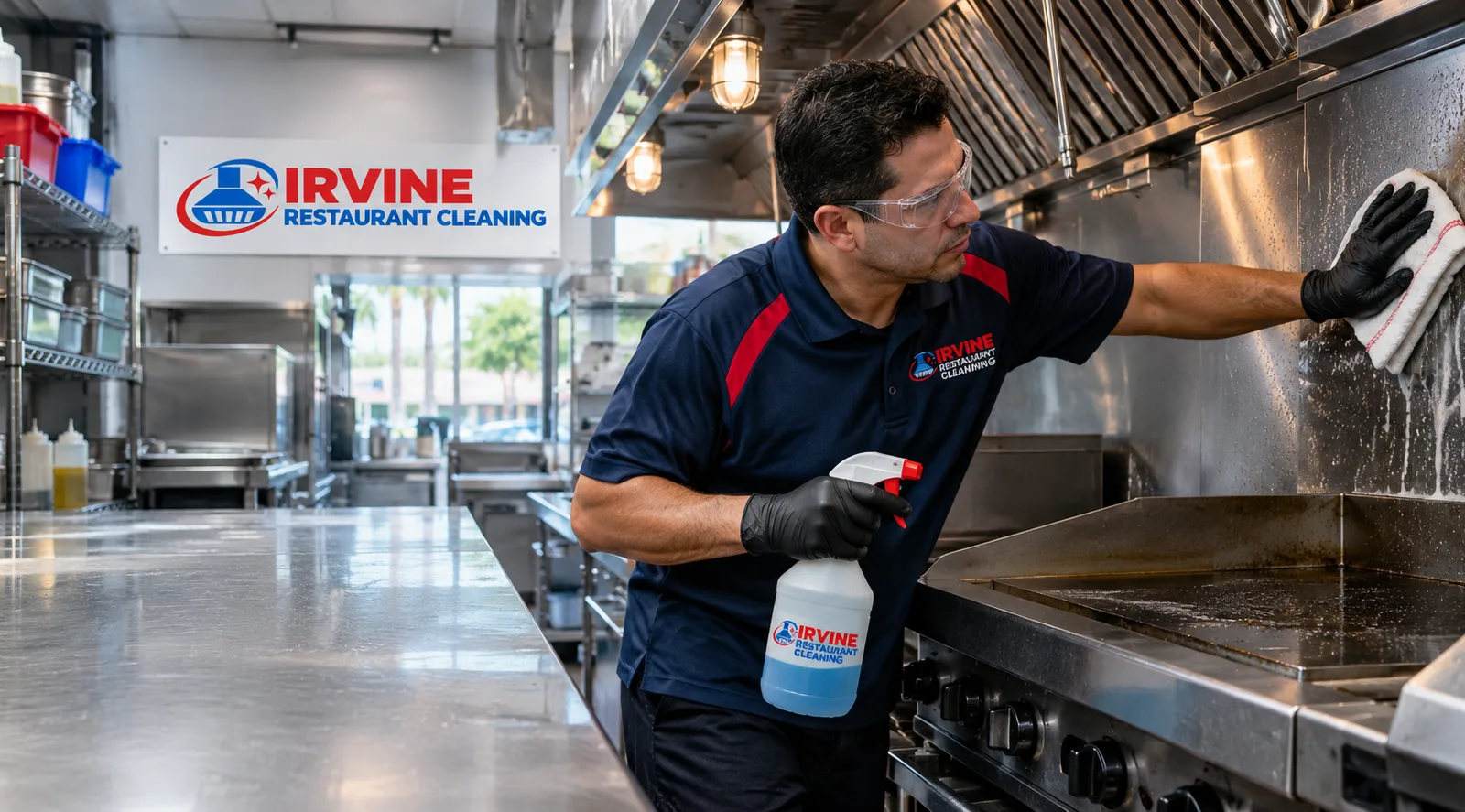
Restaurant Cleaning Garden Grove businesses can rely on should support food service rather than disrupt it. Irvine Restaurant Cleaning builds each scope around the restaurant's layout, operating hours, soil levels, and priorities. Work may be scheduled after closing, before opening, or during another agreed service window so employees can return to a clean, orderly workplace.
Our crews clean the areas named in the written scope and follow a consistent sequence on every visit. Before arrival, Irvine's local restaurant service plans the work, accounts for access and alarm procedures, and documents site-specific instructions for recurring appointments. Managers receive a practical plan rather than a generic checklist applied to every property.
Garden Grove has several restaurant settings with different demands. Dining rooms along Harbor Boulevard often contend with heavy guest turnover and frequent restroom use. Restaurants near the Outlets at Orange may need service timed around shopping and entertainment traffic. Little Saigon dining establishments can have compact, production-heavy kitchens where oil residue builds quickly around cooking lines. Historic Main Street restaurants may occupy smaller storefronts that require careful staging so equipment, furniture, and entry paths remain accessible.
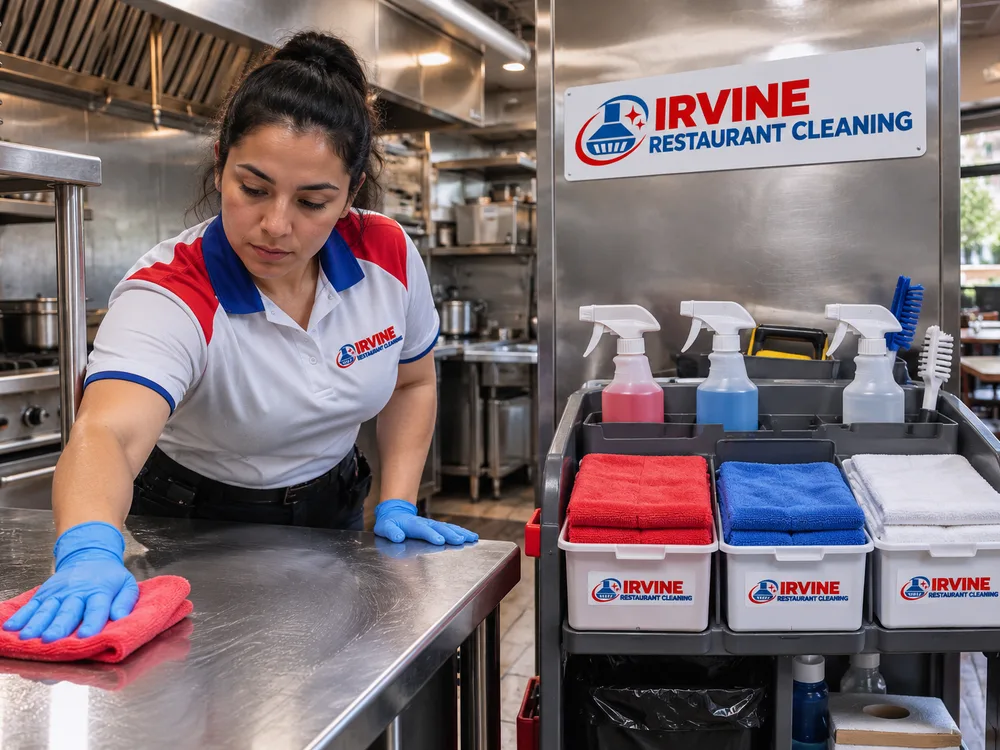
Restaurant cleaning starts with separation between food-production areas and customer-facing spaces. Crews use dedicated tools or color-coded microfiber cloths to reduce cross-contact between kitchens, restrooms, and dining rooms. High-touch points such as door hardware, payment-area surfaces, chair backs, restroom fixtures, and light switches receive focused attention.
In the kitchen, cleaning commonly covers accessible floors, baseboards, wall surfaces, stainless steel exteriors, prep-area surrounds, sinks, shelving exteriors, and the outside of cooking equipment named in the scope. Degreasing is different from routine wiping: the product needs suitable dwell time, mechanical agitation, and complete removal. Food-contact surfaces must be treated only with products and procedures appropriate for those surfaces, followed by any required rinse or sanitizing step according to the product label.
Dining-room work can include table bases, booth seats, chair legs, ledges, entry glass, hard floors, and carpeted traffic lanes. Restroom service addresses fixtures, partitions, touchpoints, mirrors, dispensers, and floors. Irvine Restaurant Cleaning can combine these tasks into one recurring plan while keeping each zone's tools and sequence separate.
Removal of grease, crumbs, spills, and tracked soil from accessible floors, equipment exteriors, prep surrounds, sinks, baseboards, and other agreed kitchen surfaces.
Cleaning for tables, seating, ledges, doors, interior glass, waiting areas, and floor surfaces that shape a guest's first impression.
Service for toilets, urinals, sinks, mirrors, partitions, dispensers, touchpoints, and floors, using tools kept separate from food-service areas.
Vacuuming, mopping, machine scrubbing, and periodic detail work selected for quarry tile, resilient flooring, sealed concrete, carpet, or another installed surface.
Routine attention to handles, rails, switches, chair backs, payment-area surfaces, and other points handled repeatedly by guests and employees.
More intensive work for buildup along edges, beneath movable items, around equipment, on walls, and in other accessible areas outside the nightly routine.
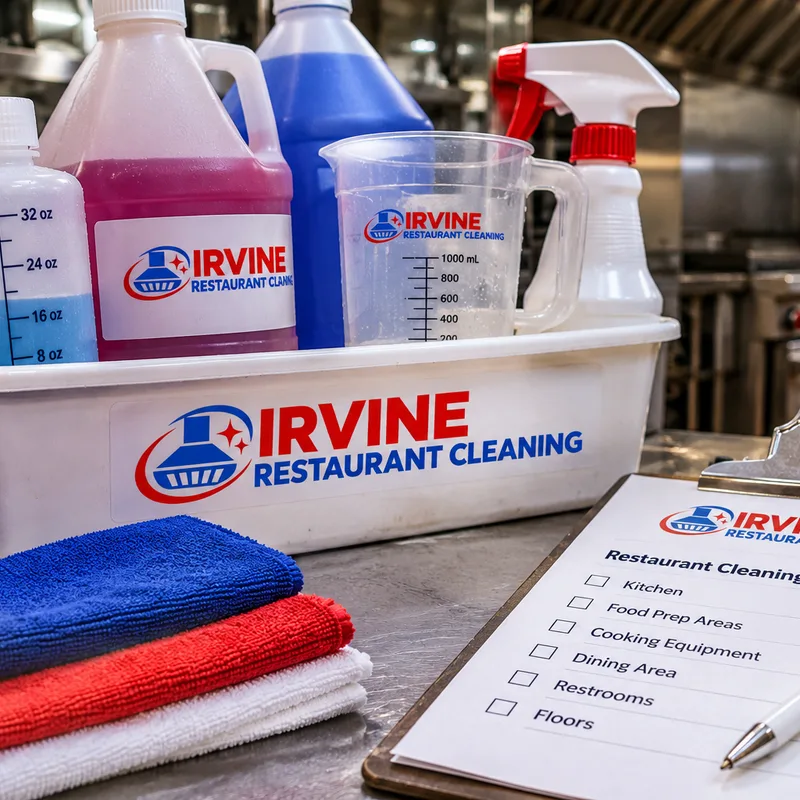
Cleaning, sanitizing, and disinfecting are separate processes. Cleaning removes food residue, grease, and other soil. Sanitizing reduces microorganisms on a cleaned surface to levels addressed by the product's approved use. Disinfecting targets specified organisms on suitable non-food-contact surfaces. A sanitizer or disinfectant cannot perform as intended when heavy soil remains or when its label instructions are ignored.
Product labels set the required dilution, contact time, compatible surfaces, ventilation needs, and whether rinsing is necessary. Crews should never mix chemicals, and Safety Data Sheets should remain available for products used at the property. Restaurants also need to keep employee food-safety procedures aligned with Orange County Environmental Health requirements. A commercial cleaning crew supports the facility's sanitation program, but management remains responsible for food handling, warewashing, temperature control, and other operational duties.
The Pacific Coast climate can bring dry dust into entrances and dining areas, while cooking operations produce their own grease film throughout the year. A useful plan accounts for both. Entry floors may need more frequent attention during busy periods, while kitchen walls, edges, and equipment surrounds benefit from planned deep-clean rotations.
From Walk-Through to Recurring Service
We review the kitchen, dining room, restrooms, entries, storage access, floor materials, problem areas, and any surfaces that require special care.
The plan identifies included areas, excluded tasks, service frequency, periodic deep-clean items, access instructions, and the preferred time window.
Managers confirm equipment shutdown requirements, movable items, key or alarm procedures, waste locations, and any areas employees must clear before service.
Crews generally work from cleaner zones toward dirtier zones and from higher surfaces toward floors, while keeping restroom tools apart from kitchen and dining equipment.
The recurring scope can be refined when operating hours, menus, floor conditions, seasonal traffic, or kitchen production levels change.
Questions to Ask Before Hiring
Ask for a scope that names the surfaces and rooms included at each visit. Terms such as “kitchen cleaning” can mean very different things, so confirm whether the quote covers equipment exteriors, walls, floor edges, drains, mats, interior glass, trash handling, and movement of lightweight furniture. Also identify tasks that require separate scheduling, equipment, or specialist access.
A qualified provider should be prepared to discuss chemical labels, cross-contamination controls, floor-care methods, quality checks, and how missed areas are reported. Ask who supplies consumables, whether the crew can work around locked areas, and how schedule changes are handled. If your restaurant is open late or starts food preparation early, the available service window may determine crew size and task rotation.
A walkthrough is especially useful in dense restaurant corridors such as Little Saigon, where parking, rear access, shared service areas, and compact kitchens can affect setup time. Near Harbor Boulevard attractions, guest-volume changes may call for more frequent dining-room and restroom attention. These operating details belong in the plan because they affect labor and timing.
Get a written restaurant cleaning scope based on your floor plan, operating schedule, surface types, and priority areas.
Call for a Free QuoteCommon Questions
Restaurant cleaning is usually priced after a walkthrough because square footage alone does not show the labor required. Cost changes with kitchen grease levels, floor materials, number of restrooms, service frequency, access, operating window, and whether the work is routine or a first-time deep clean. A compact dining room with a production-heavy kitchen may require more labor than a larger, lightly used space. The written quote should identify recurring tasks and separately scheduled detail work.
Yes, restaurant cleaning can often be scheduled after closing or before food preparation begins. The workable time window depends on your closing routine, employee departure, equipment cooldown, alarm procedures, and morning prep schedule. Restaurants near Harbor Boulevard with late guest traffic may need a different arrival plan than breakfast-focused operations. These details are confirmed during scheduling.
The right frequency depends on food production, guest volume, operating days, floor type, and the restaurant's own daily cleaning program. Busy kitchens and heavily used restrooms may need professional attention several times per week, while selected detail tasks can follow a weekly, monthly, or condition-based rotation. A walkthrough identifies which tasks belong in every visit and which are better assigned to periodic deep cleaning.
Food-contact surfaces can be included when the scope, product, and procedure are appropriate for that use. Visible soil must be removed first, and the sanitizer label determines dilution, contact time, and any required rinse. Restaurant management should confirm how professional cleaning fits with employee food-safety procedures and Orange County Environmental Health requirements.
Hood and exhaust-system cleaning should be confirmed separately because internal ducts, fans, and grease-removal devices require specialized methods and access. General restaurant cleaning may cover accessible exterior surfaces when they are listed in the scope, but that is different from cleaning the full exhaust system. The quote should state the boundary clearly.
Limited cleaning may be possible while employees are present, but kitchen production and chemical use must remain safely separated. Many restaurants choose a closed or low-activity window so floors can dry, equipment exteriors can cool, and crews can reach dining areas without interfering with guests. The safest sequence is agreed upon during the walkthrough.
Staff should secure food, remove personal items, identify hot or operating equipment, and clear agreed surfaces or floor areas. Managers should also provide access instructions, alarm details, waste-disposal directions, and notice of damaged or chemically sensitive materials. A short closing checklist helps recurring service start on time.
Tell Irvine Restaurant Cleaning about your Garden Grove location, operating hours, problem areas, and preferred service frequency. We will help define a practical scope for routine care and scheduled deep cleaning.