
Ceiling Vents and Grilles
Diffusers and return grilles can collect dust and oily film around their edges. The cleaning method should capture debris without forcing it into the ventilation opening.
Serving Irvine, California & surrounding areas
Remove built-up grease, dust, and debris from hard-to-reach kitchen surfaces with a planned cleaning scope that respects your equipment, operating schedule, and facility.
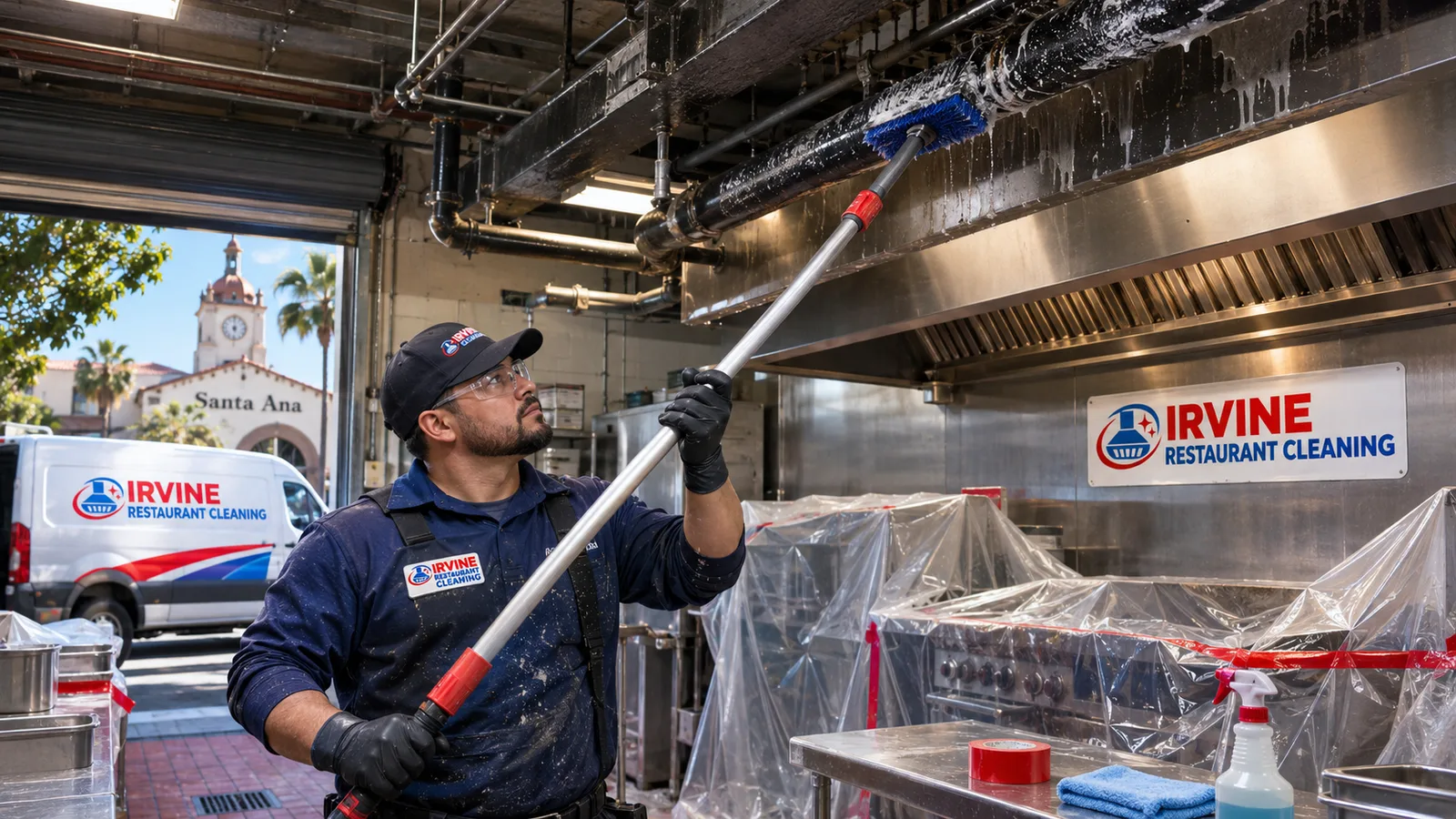
Overhead Cleaning for Working Kitchens
Restaurant High Dusting Santa Ana targets the surfaces routine nightly cleaning cannot safely or efficiently reach. That includes exposed pipes, conduit, high wall ledges, ceiling vents, light housings, beams, refrigerator tops, and the upper surfaces of equipment. Air movement can carry loose dust through a kitchen, while cooking vapor leaves a film that catches more debris. A planned high dusting visit removes that accumulation before it becomes heavier and harder to control.
Irvine Restaurant Cleaning approaches this work as restaurant specialists serving Irvine, CA who understand that a commercial kitchen cannot be treated like an empty office. Before cleaning starts, the work area is reviewed for food, smallwares, hot equipment, sensitive controls, and traffic routes. Staff then protect exposed preparation surfaces and choose tools suited to the material and type of buildup.
Santa Ana has many restaurants in compact commercial properties where kitchens share tight service corridors with storage, refrigeration, and utility runs. Downtown Santa Ana's older commercial buildings may have irregular overhead layouts or limited access around pipes. Restaurant spaces near South Coast Metro often occupy larger commercial complexes where loading access and building rules affect scheduling. The Bristol Street corridor includes busy food businesses where work may need to fit between service periods. These conditions make a written scope and access plan useful before the crew arrives.
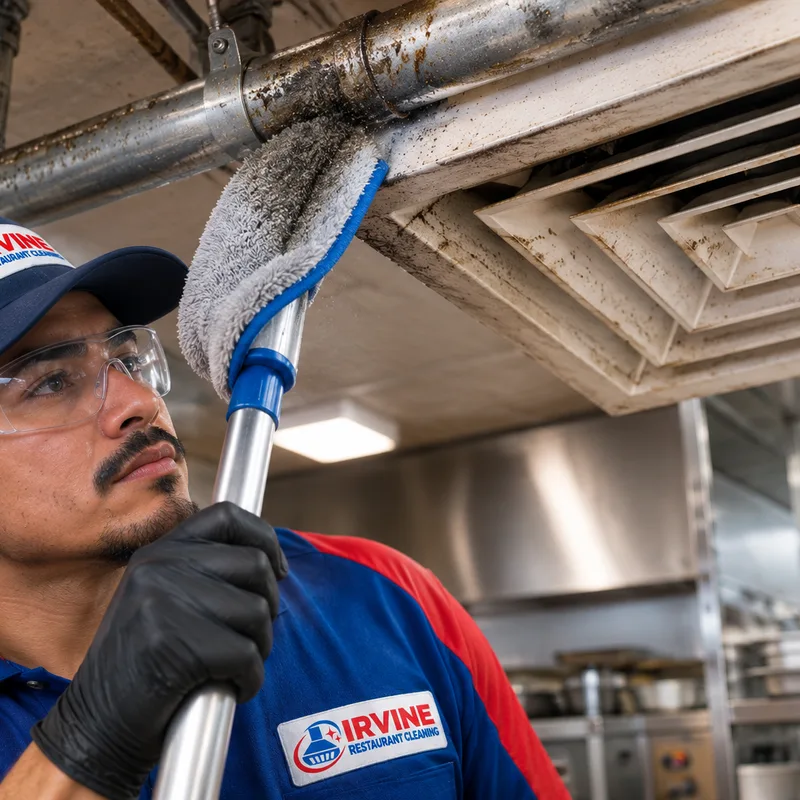
A practical scope starts with an overhead survey. The crew identifies horizontal surfaces that collect settled debris, along with greasy areas that require more than a dry microfiber pass. Common targets include ceiling diffusers, supply and return grilles, sprinkler pipes, electrical conduit, wall caps, shelving tops, pendant fixtures, structural members, and accessible fan guards. Cleaning is performed only where access is safe and the surface can tolerate the selected method.
Dry dust is commonly captured with microfiber sleeves or high-filtration vacuum attachments rather than knocked loose into the room. Light oily residue may require controlled damp wiping with a compatible degreaser. Heavier grease calls for separate evaluation because excess moisture or chemical overspray can damage electrical components, ceiling materials, food-contact surfaces, and finishes.
High dusting is distinct from exhaust-system cleaning. Hood plenums, grease ducts, and exhaust fans require specialized access and procedures. Fire-suppression components also should not be disturbed during routine overhead cleaning. These boundaries are documented so the restaurant knows which accessible surfaces are included and which items require another qualified provider.
High and Hard-to-Reach Areas
Diffusers and return grilles can collect dust and oily film around their edges. The cleaning method should capture debris without forcing it into the ventilation opening.
Round pipes and horizontal structural surfaces often sit outside the reach of daily cleaning. Extension tools help clean them while limiting ladder movement near kitchen equipment.
Fixtures, junction boxes, and nearby conduit require restrained moisture use. Power status, heat, access, and manufacturer limitations are considered before contact.
The tops of walk-ins, reach-ins, cabinets, and tall shelving collect debris that may fall when stock is moved. Nearby food and smallwares are covered or relocated first.
Wall caps, tile transitions, signs, and architectural ledges may trap dust above preparation zones. The crew selects a dry or damp method based on the finish and residue.
Tight aisles and busy service doors affect ladder placement and tool handling. The plan separates the work zone from cooks, dish staff, deliveries, and waste movement.
From Review to Final Cleanup
The restaurant identifies priority rooms, operating hours, access limits, and known problem areas. The scope can cover a kitchen, storage room, dish area, or other agreed back-of-house spaces.
The crew assesses ceiling height, residue type, equipment placement, floor conditions, overhead utilities, and ladder clearance. Areas outside safe reach or outside the agreed scope are documented.
Exposed ingredients and utensils are removed or sealed by restaurant staff as agreed. Clean covers protect preparation surfaces and equipment, while the immediate work area is kept clear.
Technicians use microfiber tools, vacuum attachments, and controlled damp cleaning as appropriate. Working top to bottom helps prevent cleaned lower surfaces from being contaminated by later overhead work.
Protective coverings are removed carefully, reachable surfaces are wiped as included, and settled material is collected. A final review notes inaccessible areas, unusual buildup, or maintenance concerns observed during the work.
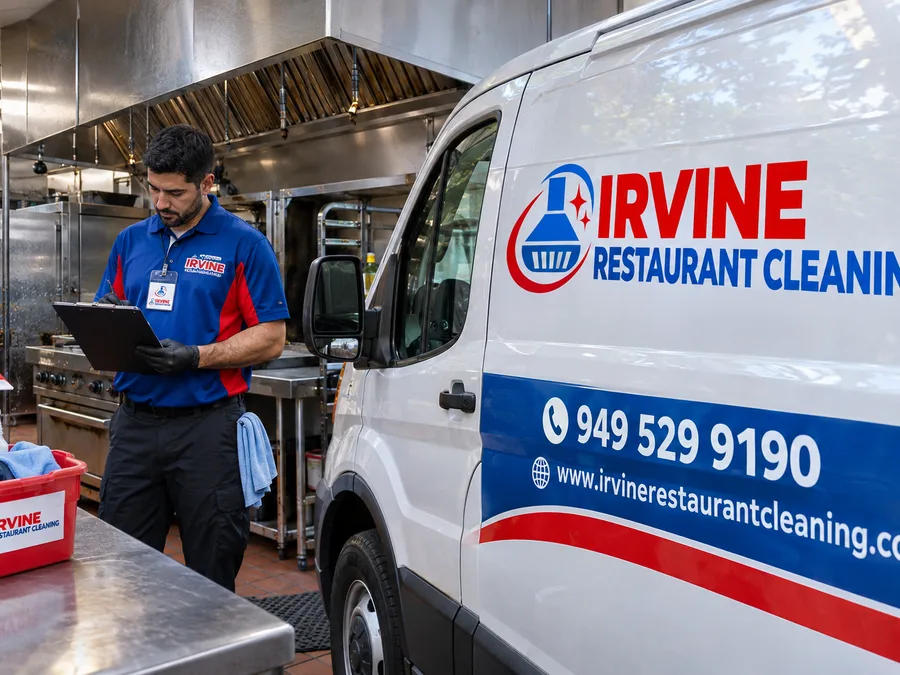
High dusting is usually easiest when cooking has stopped, hot equipment has cooled, and employees are not moving through the work zone. An overnight, early-morning, or closed-day window may be appropriate depending on the restaurant. The schedule also needs to account for alarm access, parking or loading restrictions, building management requirements, and time for surfaces to dry before food preparation resumes.
Preparation responsibilities should be settled in advance. Restaurant staff may need to remove open food, clear top shelves, secure portable equipment, and identify controls that cannot get wet. The cleaning crew can then arrive with the right extension poles, ladder type, vacuum equipment, microfiber materials, covers, and cleaning agents.
For restaurants near Downtown Santa Ana, constrained rear access and narrow service areas may affect equipment movement. In South Coast Metro, property-management procedures may determine entry and loading times. Along Bristol Street, a long service day may make an after-hours window the least disruptive choice. A site-specific plan is more reliable than assuming every commercial kitchen can be cleaned the same way.
Controlled Cleaning at Height
Loose dust and cooking residue behave differently. Dry debris can often be captured directly, but greasy film binds particles to metal, tile, painted surfaces, and plastic housings. Scrubbing too aggressively may damage a finish. Using too much liquid can spread residue, drip onto equipment, or enter openings. A knowledgeable crew tests the surface and uses the least aggressive method that can do the job.
Work-at-height safety also affects the plan. Ladders need stable, level placement and enough clearance from doors and moving staff. Extension tools can reduce climbing, but they do not make every surface safely accessible. Areas above fixed equipment, near exposed electrical hazards, or beyond practical reach may require special access equipment and a revised scope.
High dusting supports routine sanitation by removing overhead reservoirs of debris, but it does not replace daily food-contact cleaning or required hood and duct service. It also is not a certification, inspection, or guarantee of regulatory compliance. Santa Ana restaurants remain subject to applicable requirements from the Orange County Health Care Agency's Environmental Health Division and other authorities with jurisdiction. Cleaning records, photographs, and a clear description of completed work can help managers maintain their own facility documentation.
Restaurant high dusting in Santa Ana typically costs about $500 to $1,500 for a smaller kitchen or limited overhead scope, while large, tall, or heavily soiled facilities may run $1,500 to $4,000 or more. These are general, nonbinding local estimates. Ceiling height, grease buildup, square footage, ladder or lift access, protection work, after-hours scheduling, and the number of vents, pipes, and fixtures change the final price. The exact cost is confirmed after a facility review and written scope.
Request a CallbackGet a written high dusting scope that identifies priority surfaces, access requirements, kitchen preparation, and the best work window before cleaning begins.
Call for a Free QuoteCommon Questions
A limited kitchen scope may take several hours, while a large or heavily soiled facility may require a full shift or multiple visits. Ceiling height, grease level, access around fixed equipment, and the number of overhead fixtures determine the schedule. Restaurants with narrow service corridors in Downtown Santa Ana may need extra setup and repositioning time.
High dusting is generally better scheduled outside food preparation and service hours. The work can involve ladders, overhead tools, protective covers, and temporarily restricted aisles. A closed window also gives the crew room to capture debris and complete lower-level cleanup before cooks return.
Staff should remove or seal exposed food, clear agreed shelving, identify sensitive controls, and provide access to the scheduled rooms. Hot equipment should be shut down and allowed to cool when the scope requires work nearby. Exact responsibilities are set during the facility review so the kitchen is ready when the crew arrives.
Routine high dusting does not include internal hood plenums, exhaust fans, or grease ducts unless those services are specifically contracted with a qualified provider. High dusting can address accessible exterior surfaces around the hood, but fire-suppression equipment and internal exhaust components require separate procedures.
The right frequency depends on cooking volume, menu, ventilation, ceiling layout, and the rate at which visible residue returns. High-output frying or grilling can create oily deposits faster than lighter food preparation. A recurring interval should be based on observed conditions and the restaurant's sanitation plan rather than a universal calendar.
Surfaces over fixed equipment can be cleaned when there is safe access and the equipment can be protected appropriately. Ladder clearance, heat, electrical exposure, overhead obstructions, and the risk of drips are evaluated first. Special access equipment or a revised work plan may be needed for tall or obstructed areas.
Accessible heavy grease can often be reduced or removed, but it may require degreasing rather than standard dust capture. The result depends on the surface material, residue age, coating condition, and whether moisture can be used safely. A test area helps establish the suitable method before broader cleaning.
High dusting can remove visible overhead dust and residue as part of a restaurant's sanitation work, but it does not guarantee an inspection outcome. The Orange County Health Care Agency's Environmental Health Division applies requirements that extend beyond overhead surfaces. Managers should keep up with food-contact sanitation, pest control, equipment condition, and other applicable duties.
Tell Irvine Restaurant Cleaning about the kitchen layout, ceiling height, visible buildup, and preferred work window. We will help define a practical scope that protects your operation and addresses the overhead areas routine cleaning misses.