
Cooking-Line Detailing
Cleaning around accessible fryers, ranges, ovens, prep equipment, splash zones, casters, and floor edges after appliances are shut down and cool enough to service safely.
Serving Irvine, California & surrounding areas
Detailed cleaning for commercial kitchens, walk-in coolers, dining areas, storage spaces, and hard-to-reach surfaces, planned around your operating schedule.
Detailed Care for Working Restaurants
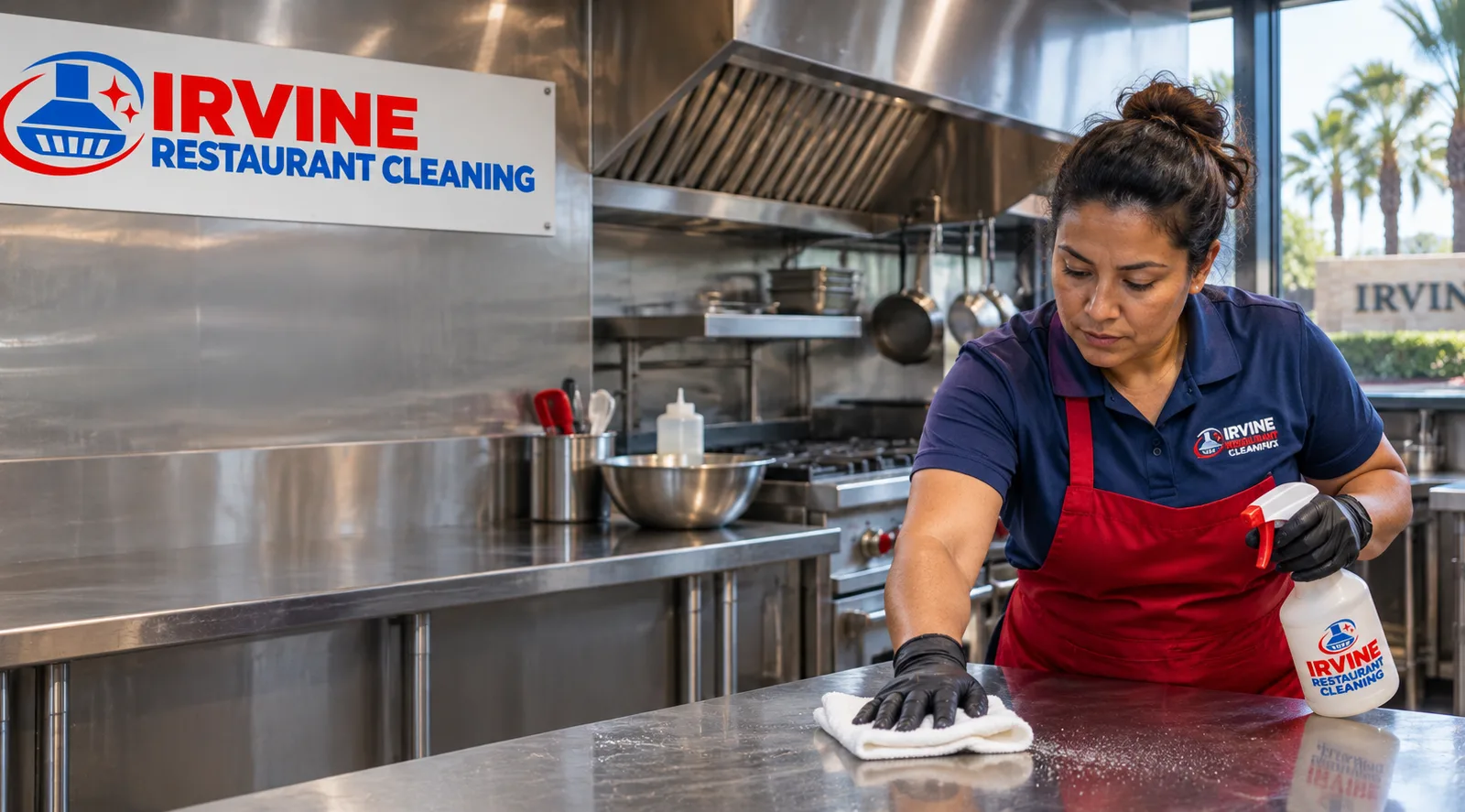
A dependable Restaurant Cleaning Company handles the buildup that routine opening and closing work may leave behind. Irvine Restaurant Cleaning develops a written scope around your kitchen equipment, food-preparation zones, coolers, dining areas, storage rooms, and high surfaces. The goal is a clean, orderly facility without disrupting service more than necessary.
Our work can be scheduled as a one-time deep clean, preparation for an inspection or reopening, or recurring detailed service. We are an experienced restaurant team in Irvine, CA that plans access around the realities of food service: hot equipment must cool, food and utensils need protection, and cleaned surfaces may require drying time before the next shift. We also identify exclusions before work begins, so your staff knows which equipment will be moved, what must be emptied, and which areas require separate specialist service.
The scope is tailored to the facility rather than copied from a generic checklist. A compact café near the Irvine Spectrum Center has different access and scheduling needs than a larger dining operation at Diamond Jamboree. Restaurants around University Center may need short service windows between busy meal periods, while commercial kitchens in the Irvine Business Complex may have loading, parking, or building-access rules that affect arrival and equipment setup.
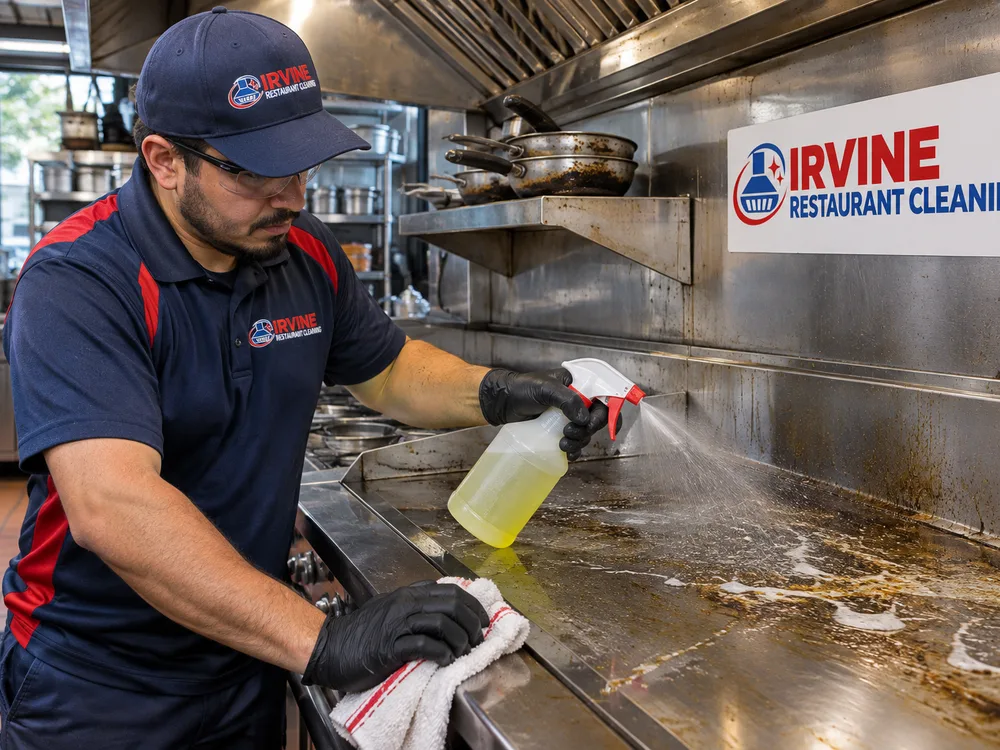
Kitchen deep cleaning targets grease film, food residue, dust, and soil on accessible surfaces that receive less attention during daily sanitation. A typical scope may include stainless steel worktables, equipment exteriors, shelving, backsplashes, wall surfaces, baseboards, floor edges, movable equipment footprints, drains where included, and the undersides of accessible fixtures.
Work starts with dry soil and loose debris, followed by degreasing or washing with products selected for the surface. Agitation and dwell time help loosen bonded residue. The area is then rinsed or wiped as appropriate, and food-contact surfaces receive the required final treatment before being returned to use. Chemicals are never mixed casually, and product labels govern dilution, contact time, ventilation, and surface compatibility.
Commercial kitchen deep cleaning is separate from exhaust-system cleaning inside hoods and ducts, pest control, grease-trap pumping, equipment repair, and fire-suppression service. Those exclusions matter because each task requires different training and equipment. Our written scope distinguishes accessible hood exteriors and surrounding surfaces from internal exhaust components.
Detailed Facility Coverage
Cleaning around accessible fryers, ranges, ovens, prep equipment, splash zones, casters, and floor edges after appliances are shut down and cool enough to service safely.
Detailed attention to worktables, shelving, sink surrounds, backsplashes, walls, equipment exteriors, and residue-prone corners. Food-contact surfaces are treated according to the approved scope.
Restaurant detailed cleaning can include tables, chair frames, booths, ledges, baseboards, partitions, service stations, doors, and other frequently touched or overlooked surfaces.
Service may cover degreasing, scrubbing, and soil removal along grout lines, thresholds, corners, under movable items, and around equipment feet, subject to flooring type and condition.
Accessible shelving, walls, floors, and exterior surfaces can be cleaned after products, packaging, and loose supplies are removed or secured by restaurant staff.
High dusting addresses accessible vents, pipes, ledges, light surrounds, ceiling fans, and structural surfaces using extension tools or suitable access equipment.
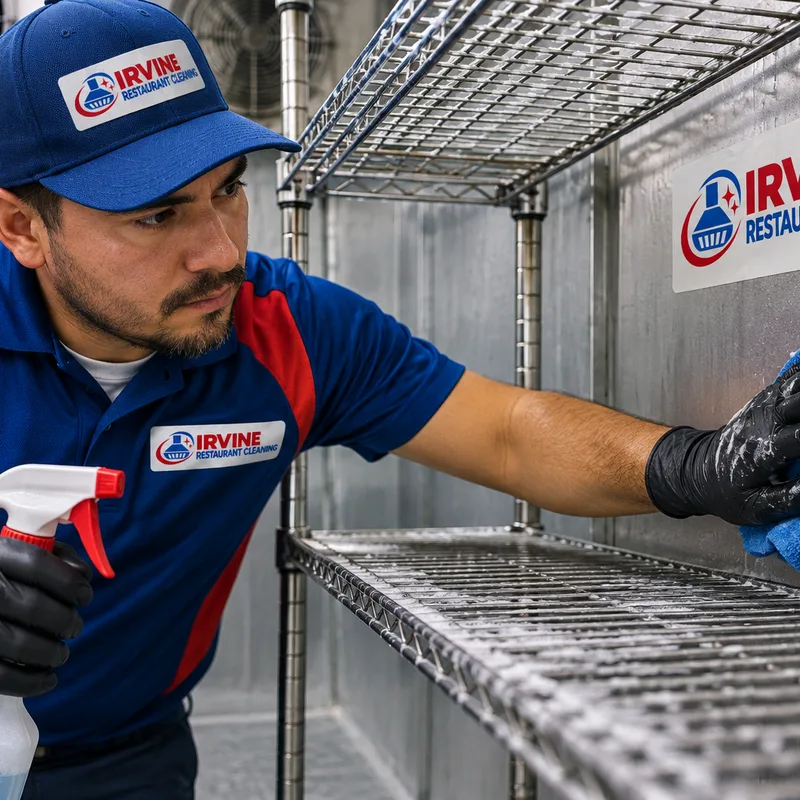
Walk-in cooler cleaning requires a plan for food, temperature control, condensation, and safe chemical use. Before work starts, restaurant staff should remove or securely protect exposed products and identify anything that cannot be relocated. The cleaning scope can cover floors, wall panels, doors, gaskets, shelving, fan guards where safely accessible, and exterior surfaces of stored containers.
Technicians remove loose debris first, then clean soils with products compatible with cooler panels, metals, gaskets, and flooring. Standing water must be controlled because it creates a slip hazard and can migrate beneath shelving or stored goods. Heavy ice accumulation, damaged seals, active leaks, mold inside insulated assemblies, and refrigeration faults require evaluation beyond ordinary cleaning.
A cooler should not be left open longer than the work requires. The restaurant remains responsible for monitoring food temperatures and deciding whether products are safe to return. We coordinate the work window with the person in charge and document which racks, surfaces, and floor areas are included.
From Walkthrough to Review
We review the kitchen, cooler, dining room, storage areas, access points, surface conditions, and operating schedule. Priority concerns and exclusions are recorded before pricing.
The written plan identifies the areas and surfaces to be cleaned, preparation expected from restaurant staff, equipment-movement limits, timing, and any conditions that may require separate approval.
Food, utensils, paper goods, and sensitive items are removed or protected. Equipment is shut down when required, warning signs are placed, and cleaning tools are organized to reduce cross-contamination.
Restaurant deep cleaners generally work from high surfaces toward lower surfaces and floors. Tools and chemicals are matched to the soil and material, with extra attention to corners, edges, casters, and equipment footprints.
We inspect the included areas, identify any permanent staining or damage that cleaning cannot correct, and review the results with an authorized restaurant representative.
Local Scheduling and Honest Limits
Restaurant cleaning must fit the operating environment. Irvine Spectrum Center and Diamond Jamboree restaurants can experience concentrated evening and weekend traffic, making overnight or closed-day work practical when building access permits it. University Center businesses often work around academic and meal-period demand. In the Irvine Business Complex, mixed commercial uses and managed properties can introduce loading instructions, elevator rules, or after-hours entry procedures. These factors are confirmed before equipment and crews are dispatched.
Southern California's generally dry conditions can contribute to dust on high ledges, vents, pipes, and suspended fixtures, particularly near frequently opened doors and active loading areas. High dusting is completed before lower surfaces so dislodged material can be captured during the remaining work. Access height, overhead utilities, cooking activity, and whether an area can be isolated determine the safe method.
A thorough result also depends on honest limits. Cleaning can remove soil and buildup, but it cannot repair etched stainless steel, failed grout, damaged floor coatings, corroded shelving, deteriorated caulk, or refrigeration leaks. We note these conditions so cleaning is not mistaken for restoration or repair.
Restaurant deep cleaning in Irvine typically ranges from $500 to $2,500 for many small to midsize facilities, while large kitchens or heavy buildup can cost more. A focused cooler or kitchen-area service may fall toward the lower end; a full restaurant detail with high dusting usually costs more.
Final pricing depends on square footage, grease level, equipment movement, access height, surface condition, cooler preparation, parking, and the available work window. A walkthrough or detailed scope review confirms the exact cost before service.
Request a CallbackGet a written cleaning scope built around your facility, operating hours, priority areas, and access requirements before work begins.
Call for a Free QuoteCommon Questions
A focused service may take several hours, while a full kitchen, dining area, cooler, and high-dusting scope may require an overnight window or more than one visit. Facility size, soil level, equipment access, and drying time affect the schedule. Irvine properties with controlled after-hours access or loading rules should provide those instructions during planning.
Limited work may be possible during operating hours, but intensive kitchen deep cleaning is usually safer and more efficient when food production has stopped. Hot equipment, wet floors, chemicals, extension tools, and moving staff create avoidable conflicts. The exact schedule is planned around meal periods, closing duties, and building-access restrictions.
Restaurant staff should remove or securely protect exposed food, clear agreed shelving, and maintain required product temperatures throughout the service. The person in charge should also identify leaks, damaged panels, unstable racks, or electrical concerns. Cooler contents and temperature decisions remain under the restaurant's control.
Accessible hood exteriors and nearby surfaces may be included, but internal hood, filter, fan, and duct cleaning requires a separately defined exhaust-system scope. Fire-suppression components must not be disturbed by ordinary cleaning. We identify the boundary during the walkthrough so the written plan is clear.
The right interval depends on cooking volume, menu, grease production, staffing, facility design, and daily cleaning practices. High-volume fry or grill operations may need detailed service more often than a low-grease café. A post-service review can identify which surfaces accumulate soil fastest and help set a practical recurring schedule.
Yes, when food, utensils, and equipment are removed or fully protected and the area is taken out of production. High surfaces are cleaned before counters and floors so falling dust can be collected afterward. Access may be restricted around energized equipment, fragile fixtures, fire-suppression lines, or unsafe ceiling conditions.
Cleaning removes removable soil, but it cannot guarantee correction of permanent discoloration, etching, corrosion, failed coatings, or grease that has penetrated porous material. A test area can help distinguish surface buildup from material damage. Existing defects are documented when they affect the expected result.
Tell Irvine Restaurant Cleaning about your facility, priority areas, preferred work window, and current buildup. We will define the preparation requirements and provide a clear scope for review.