Restaurant Cleaning · Fullerton

Restaurant Cleaning Services Fullerton

Dependable care for commercial kitchens, dining rooms, restrooms, and floors, scheduled around your operating hours.

✓ One-time or recurring care
✓ Written cleaning scope
✓ Service around operating hours
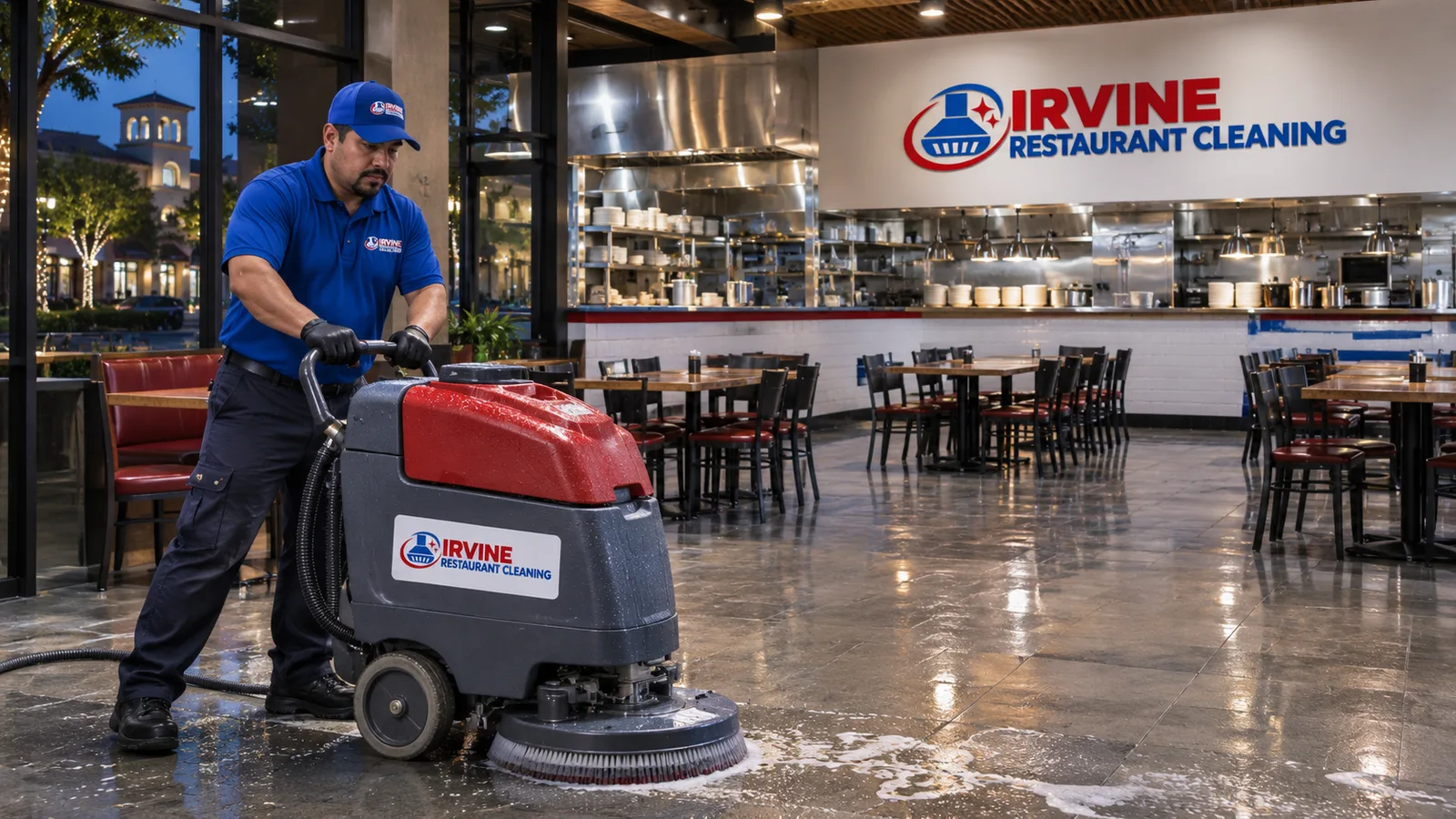
Professional cleaner using commercial floor equipment in a Fullerton restaurant after closing, with dining tables and an open kitchen visible

Professional Restaurant Cleaning Built Around Your Operation

Restaurant Cleaning Services Fullerton should support a safe, presentable operation without disrupting prep, service, or closing duties. Irvine Restaurant Cleaning develops recurring and one-time scopes for independent restaurants, cafés, bars, quick-service locations, and multi-unit operators. Work can be scheduled before opening, after closing, or during an agreed low-traffic period.

Our restaurant specialists serving Irvine bring the same practical approach to Fullerton: inspect the space, separate routine tasks from periodic detail work, and document what the crew is responsible for. The scope may include food-contact-adjacent surfaces, non-food-contact equipment exteriors, floors, dining areas, restrooms, entry glass, and waste-handling zones. Cleaning products and methods are selected for the surface and soil rather than applied as a one-product routine.

Fullerton restaurants range from compact storefronts around Downtown Fullerton to larger dining rooms near major corridors such as Harbor Boulevard and restaurants serving the California State University, Fullerton area. Each setting creates different access, timing, and floor-care needs. A walkthrough lets the crew account for kitchen layout, customer traffic, closing procedures, storage limits, and any areas handled by restaurant staff.

Complete Front and Back-of-House Care

What Restaurant Cleaning Fullerton Can Cover

✓

Commercial Kitchen Cleaning

Degreasing for washable walls, backsplashes, equipment exteriors, prep-area floors, floor edges, and reachable surfaces. Crews follow the approved scope and avoid controls, pilot lights, electrical components, and food unless specific procedures have been established.

✓

Dining Room Care

Cleaning may include tables and chair frames, booths, ledges, partitions, baseboards, entry glass, and floors. The method is adjusted for sealed concrete, resilient flooring, tile, carpet, or other installed finishes.

✓

Restroom Cleaning

Fixtures, partitions, counters, mirrors, touchpoints, dispensers, and floors receive focused cleaning. Restocking can be added when the restaurant supplies compatible paper goods, liners, soap, and other consumables.

✓

Floor Maintenance

Vacuuming, sweeping, damp mopping, machine scrubbing, and scheduled detail work can address tracked-in grit, food residue, grease film, and buildup along edges. Slip-prone areas require the correct chemistry, dwell time, rinsing, and drying procedure.

✓

Front and Back-of-House Touchpoints

Door hardware, host stands, service stations, handrails, and approved shared surfaces can be included. A written checklist keeps responsibilities clear between the cleaning crew and restaurant employees.

✓

Periodic Deep Cleaning

Detail visits can target neglected edges, grout lines, wall splatter, vents that are safe to access, furniture bases, and spaces behind movable items. Specialized hood, duct, pest-control, and hazardous-material work requires the appropriate provider.

Kitchen Degreasing Requires the Right Method

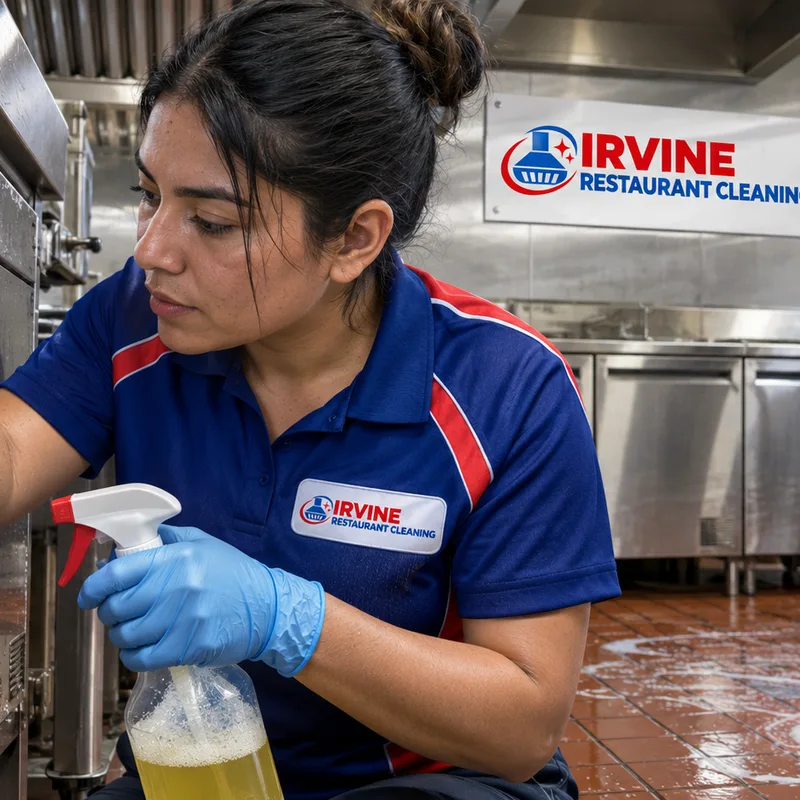
Trained cleaner degreasing stainless-steel equipment exteriors and scrubbing a commercial kitchen floor with food and utensils removed
Surface-compatible products and documented dwell times matter in grease-heavy kitchens.

Kitchen soil is rarely uniform. Fresh cooking oil, carbonized residue, protein, tracked-in grit, and mineral deposits respond to different products and agitation methods. A suitable degreaser needs adequate dwell time, but it must also be compatible with stainless steel, painted surfaces, tile, grout, and resilient flooring. Crews should follow product labels and Safety Data Sheets, protect nearby food and utensils, and rinse surfaces when the product directions require it.

Food-contact surfaces need particular care. Cleaning removes soil; sanitizing is a separate step performed with an approved product at its labeled concentration and contact time. The restaurant and cleaning provider should agree on which food-contact surfaces are included, who clears and protects food, and who returns equipment or utensils to service.

Exhaust hood and duct cleaning is a distinct fire-safety trade and should not be confused with wiping accessible hood exteriors. Grease interceptors, pest treatment, and repairs are also outside routine janitorial cleaning. Clear boundaries help restaurant managers coordinate these services without leaving gaps.

From Walkthrough to Quality Check

How Our Restaurant Cleaning Services Fullerton Process Works

  1. 01

    Walk Through the Restaurant

    We review the kitchen, dining room, restrooms, entries, storage constraints, floor materials, waste areas, and access procedures. Managers can identify recurring trouble spots and tasks retained by employees.

  2. 02

    Define the Scope and Frequency

    The written scope lists included areas, exclusions, visit frequency, preferred service window, consumable responsibilities, and periodic work. It can distinguish nightly essentials from weekly or monthly detail tasks.

  3. 03

    Prepare the Site and Cleaning Plan

    Before service, the restaurant secures food, cash, sensitive records, and personal items. The crew plans product use, equipment, sequencing, and wet-floor controls based on the approved scope.

  4. 04

    Clean in a Controlled Sequence

    Crews generally move from cleaner areas toward heavier soil and from higher surfaces toward floors. Color-coded cloths or tools can reduce cross-contact between restrooms, dining areas, and kitchen zones.

  5. 05

    Inspect and Record Issues

    The crew checks completed work, returns approved movable items, and reports leaks, damaged finishes, inaccessible areas, or unusual buildup. Manager feedback is used to correct scope or scheduling issues.

A Schedule That Fits Fullerton Restaurants

Commercial cleaning crew arriving discreetly at a Fullerton restaurant during a closed service window with compact floor equipment and labeled supplies

Cleaning frequency depends on operating hours, menu, cooking volume, floor material, customer traffic, and the tasks completed by employees. A grease-producing kitchen may need frequent floor and equipment-exterior care, while carpeted dining areas may require routine vacuuming plus periodic extraction. Entry areas also collect more tracked-in soil during wet weather, so mats and floor procedures should be reviewed seasonally.

Downtown Fullerton locations may have compact back-of-house layouts, shared access, or limited loading space. Restaurants near the university may experience sharp changes in traffic around the academic calendar and events. Properties along busy commercial corridors can have longer service hours or higher entry-floor demand. These conditions affect crew timing, equipment selection, and the amount of detail work practical during each visit.

California restaurants operate under food-safety requirements enforced through local public health authorities. Professional cleaning supports housekeeping, but it does not replace the restaurant operator's food-safety program, employee sanitation duties, pest-control plan, equipment maintenance, or required hood and duct service.

Clear Tasks, Frequencies, and Boundaries

What to Look for in a Restaurant Cleaning Scope

A useful proposal names the rooms and surfaces being cleaned, how often each task occurs, and what is excluded. Broad phrases such as “clean the kitchen” are difficult to verify. A better scope identifies equipment exteriors, washable wall areas, floor edges, under-counter access, dining furniture, restrooms, glass, and waste zones as separate tasks.

Ask how the provider prevents cross-contamination, manages wet floors, trains crews on chemical labels, and handles keys or alarm procedures. Confirm whether the restaurant or provider supplies consumables and whether periodic machine work is included. Managers should also discuss sensitive finishes, unsecured casters, damaged grout, loose flooring, and equipment that cannot be moved safely.

The lowest quoted price may reflect fewer tasks, shorter visits, or limited periodic care. Compare scopes line by line rather than comparing totals alone. Irvine Restaurant Cleaning can prepare a plan based on the actual layout, requested frequency, soil level, access window, and division of duties between the crew and restaurant employees.

A walkthrough turns general expectations into a written cleaning scope, a workable service window, and clear responsibilities for both the crew and restaurant staff.

Call for a Free Quote

Common Questions

Questions About Restaurant Cleaning in Fullerton

How much do restaurant cleaning services cost in Fullerton?+

Restaurant cleaning is usually priced after a walkthrough because square footage alone does not show kitchen grease levels, floor materials, operating hours, or required detail work. Visit frequency, crew time, access, equipment, consumables, and periodic machine cleaning all affect the quote. A compact café with light cooking needs a different scope than a full-service kitchen along Harbor Boulevard. The exact price should be confirmed in a written proposal.

Can cleaning be scheduled after the restaurant closes?+

Yes, service can often be scheduled after closing, before opening, or during another approved low-traffic window. The best time depends on staff departure, alarm access, food storage, equipment cooldown, floor drying, and the time needed before the opening crew arrives. Downtown Fullerton properties with shared access may also require coordination with a landlord or neighboring tenant.

How often should a Fullerton restaurant be professionally cleaned?+

Frequency should match the restaurant's cooking volume, customer traffic, floor materials, and employee cleaning routine. High-use kitchen floors and restrooms may need attention each service day, while grout detailing, carpet extraction, or machine scrubbing can follow a periodic schedule. The initial walkthrough should separate frequent sanitation support from less frequent deep cleaning.

Do you clean restaurant exhaust hoods and ducts?+

Routine service may include accessible hood exteriors when listed in the scope, but internal exhaust hood and duct cleaning is specialized fire-safety work. Restaurants should use an appropriately qualified provider for the full exhaust system and maintain the required service records. The cleaning scope should state this boundary clearly so exterior wiping is not mistaken for complete hood-system cleaning.

Will professional cleaning help a restaurant prepare for a health inspection?+

Professional cleaning can address visible soil and agreed housekeeping tasks, but it cannot guarantee an inspection outcome. Fullerton restaurants remain responsible for food temperatures, employee practices, warewashing, pest prevention, equipment condition, and other requirements overseen by the local health authority. A documented scope can help managers identify who handles each cleaning task before an inspection.

Do we need to move food and equipment before the crew arrives?+

Restaurant staff should secure exposed food, utensils, cash, records, and personal property before cleaning begins. The walkthrough determines which movable items the crew may reposition and which equipment must remain in place. Heavy, connected, hot, or unstable equipment should not be moved unless safe access and responsibility have been agreed in advance.

Can one plan cover the kitchen, dining room, and restrooms?+

Yes, one plan can cover front-of-house and back-of-house areas while assigning separate tools, products, and procedures to each zone. Color-coded supplies are one practical way to reduce cross-contact between restroom and food-service areas. The checklist should still identify each room and task separately so managers can verify completion.

Set Up a Reliable Restaurant Cleaning Plan

Tell Irvine Restaurant Cleaning about your Fullerton location, operating schedule, floor types, and problem areas. We will review the space and outline a practical scope for routine care or a focused deep clean.